
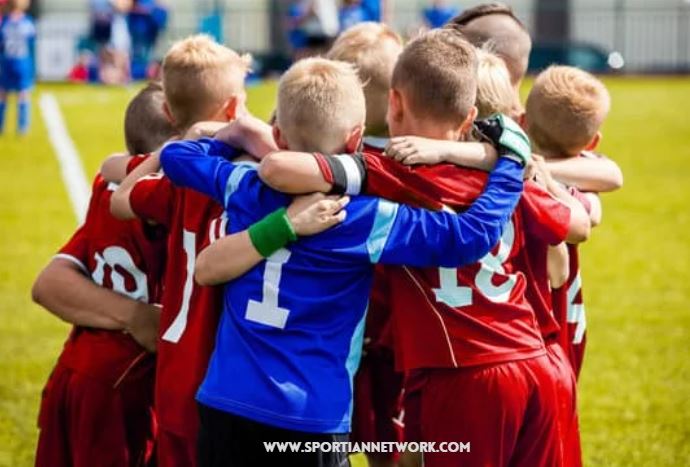
Individual talent wins moments. Team synchronization wins championships. Every coach at every level understands this in theory. The challenge has always been building synchronization systematically, not hoping it develops naturally through enough time together.
ABCTM solves that problem. Short for Adaptive Balance and Coordination Team Model, it is a strategic training framework in sports technology that develops balance, coordination, and team synchronization to improve efficiency and long-term collective performance.
This is not a drill or a single methodology. Instead, it is a complete framework that reshapes how teams train, move, and think together.
What ABCTM Actually Is
ABCTM sits at the intersection of sports science and team development. The name breaks down cleanly into its core components.
Adaptive means the framework adjusts to the specific needs, strengths, and weaknesses of the team applying it. Since no two squads are identical, a framework that ignores individual team characteristics produces generic results. ABCTM starts with assessment and builds from there.
Balance refers to both physical stability at the individual level and structural balance at the team level. A player who lacks physical stability becomes a liability in high-contact, high-speed situations. Similarly, a team that is structurally unbalanced, too attack-heavy or too dependent on one player’s decisions, is predictable and fragile.
Coordination covers the full range of movement quality, from individual motor patterns to the synchronized movement of multiple players executing a combined action. Poor coordination at either level limits what a team can execute under match pressure.
Team Model is the organizing principle that ties everything together. Rather than developing these qualities separately, ABCTM builds them as interconnected parts of one system, because in competition players never experience them in isolation.
The Problem It Was Built to Solve
Most traditional training frameworks develop physical qualities and tactical qualities in separate blocks. Players work on fitness, then skills, then team shape. Coaches assume these elements will combine naturally during matches.
They rarely do as cleanly as expected.
Physical qualities developed outside tactical context do not transfer automatically. A player with excellent individual balance does not automatically contribute to team balance. Moreover, a player with sharp individual coordination does not automatically synchronize with teammates under pressure. The missing ingredient is integrated development, training that builds physical and tactical qualities together, in the same environment, at the same time.
ABCTM addresses this directly. Because every session inside the framework develops individual physical qualities and team coordination simultaneously, the player is always training their relationship to the team structure around them, not just training their body.
The Four Development Layers
ABCTM operates through four distinct development layers, each building on the one before it.
The first layer is individual physical foundation. Before team synchronization can develop, every player needs a baseline of physical stability and movement quality. Strength exercises that build functional stability, single-leg strength, and rotational control are central at this stage. Players who skip this layer struggle to hold positions under pressure, which undermines everything the team builds on top of it.
The second layer is individual coordination refinement. Once physical stability is established, ABCTM focuses on movement precision. How cleanly does the player move into position? How quickly do they adjust body orientation to execute the next action? Mobility work plays a significant role here, because coordination without adequate range of motion produces compensated, inefficient movement patterns that break down under fatigue.
The third layer is pair and small-group synchronization. Players begin training their movement in relation to one or two teammates. Timing of runs, spacing adjustments, and combined defensive actions are drilled in small units before scaling to the full team. This layer is where physical and tactical qualities begin to genuinely integrate.
The fourth and final layer is full team model application. At this stage, the framework scales to the complete squad, developing the synchronized movement and collective decision-making that define high-functioning team performance. Players are no longer just executing tactics. They are moving as a coordinated unit where each player’s action anticipates and supports the players around them.
Why Synchronization Matters More Than Ever
Modern sports at the elite level has become extraordinarily well-organized. Pressing systems, defensive compactness, and transition speed have reached levels of sophistication that make individual quality harder to convert into team success than it was a generation ago.
Consequently, the teams that consistently outperform their individual talent levels share one common quality: they move together. Defensive lines that step as a unit. Midfield presses that trigger simultaneously. Attacking combinations where the third player’s run happens before the ball is even played. These are not coincidences. Rather, they are the product of deliberate synchronization training.
ABCTM gives coaches a structured pathway to develop exactly these qualities. Periodization principles applied within the framework ensure that synchronization development is planned across a full season, not crammed into preseason and abandoned once competitive matches begin.
The Technology Component
The word technology in ABCTM’s full title is not incidental. The framework actively integrates with modern sports performance tools.
GPS tracking data informs the adaptive component, showing coaches where individual players lose positional accuracy under fatigue and where team spacing breaks down in specific match situations. Video analysis identifies coordination breakdowns at the pair and unit level that live play makes invisible to the naked eye. Load monitoring ensures that the physical demands of synchronization training stay carefully managed, because concentrated, high-attention ABCTM sessions carry their own fatigue profile.
Proper recovery protocols are built into the framework for exactly this reason. Synchronization degrades faster than physical performance under fatigue. A team that is physically capable but cognitively tired loses coordination before they lose fitness. As a result, ABCTM treats recovery as a performance variable, not an afterthought.
The Conversation
Some coaches push back on frameworks like ABCTM, arguing that synchronization cannot develop systematically. Their position is that team cohesion is an organic quality, built through shared experience, trust, and time together rather than structured training protocols.
That perspective, however, underestimates what deliberate practice achieves. Organic cohesion is real, but it is slow and unreliable. Two players who have trained together for years develop an intuitive understanding of each other’s movement. ABCTM accelerates that process by making movement patterns explicit, repeatable, and trainable from the first week of a program.
The best teams combine both approaches. Organic trust built through shared experience, and deliberate synchronization developed through structured frameworks. ABCTM does not replace the human element of team cohesion. Instead, it gives that element a foundation to build on faster.
Conclusion
Sports performance science has made enormous progress in developing individual athletes. Training loads, nutrition, recovery, biomechanics, and mental preparation are all understood at a level that would have seemed extraordinary thirty years ago.
Team development, however, has lagged behind. The frameworks for developing collective performance have not kept pace with the science available to develop individual performance. As a result, ABCTM represents a genuine step toward closing that gap.
Teams that adopt it gain something their opponents are unlikely to have: a systematic, evidence-informed approach to building the synchronized collective movement that wins matches individual talent alone cannot.
Balance. Coordination. Synchronization. Built deliberately. Built together. Built to last.