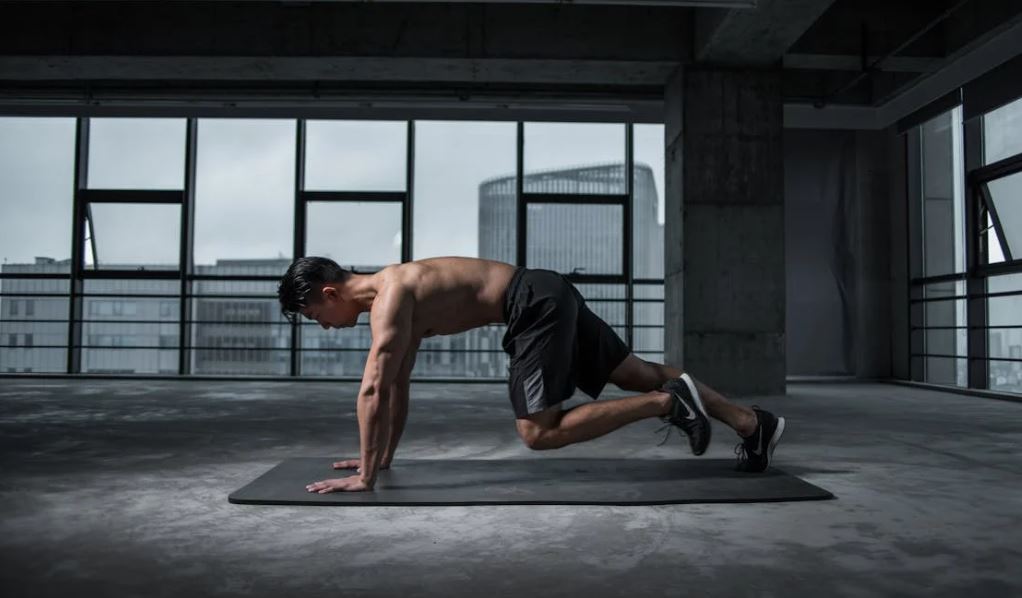
Core Training
for Athletes:
Beyond Crunches
and Planks
The six-pack is a side effect, not the goal. Real athletic core training is about force transfer, rotational power, and injury resilience — and most programs are getting it completely wrong.
Every athlete has done them. The endless sets of crunches after a training session, the two-minute plank held while staring at the gym ceiling, the leg raises that leave your hip flexors burning more than your abs. For decades, these were the core training canon — standard-issue, unquestioned, and largely ineffective for the specific demands of athletic performance.
Here’s what those exercises actually train: surface-level anterior trunk flexion and static isometric endurance in a single plane of movement. Here’s what sport actually demands: multi-directional stability, explosive rotational power, the ability to absorb and instantaneously redirect force under fatigue, and a nervous system that can stiffen the trunk in milliseconds to protect the spine during chaotic, unpredictable athletic movements.
Those are not the same thing. Not even close.
This article is about the gap between traditional core training and what athletes actually need — and how to close it.
What the Core Actually Is
Before fixing core training, you have to understand what you’re working with. The popular conception of the core — the rectus abdominis, the visible “six-pack” muscle — represents only one layer of a highly sophisticated system. Sports scientists and physiotherapists now think of the core as a muscular canister with four walls:
The top (roof): the diaphragm, your primary breathing muscle, which also functions as a crucial stability structure when properly tensioned during exertion.
The bottom (floor): the pelvic floor musculature, which resists downward pressure and anchors force transfer between the lower limbs and trunk.
The front and sides: the rectus abdominis, internal and external obliques, and the transverse abdominis — the deepest abdominal muscle, which wraps like a corset and is the primary contributor to intra-abdominal pressure.
The back: the erector spinae, multifidus, and quadratus lumborum — the posterior chain of the trunk that the fitness world has historically undertrained relative to anterior muscles.
The spine connects all of it. And the spine’s job during athletics is not to be rigid — it’s to be appropriately stiff at the right moments, mobile at others, and capable of transferring energy efficiently between the lower and upper body without leaking force or exposing the vertebrae to excessive shear load.
Proximal stability enables distal mobility. Translation: the more stable and controllable your trunk, the more power your limbs can generate. A weak, unstable core doesn’t just increase injury risk — it mechanically limits how much force your arms and legs can produce. Core strength is directly upstream of athletic output.
The Three Pillars of Athletic Core Function
Rather than thinking about core “exercises,” think about core functions. Trained well, your core should be capable of three distinct mechanical roles — and your program should develop all three.
1. Anti-Movement: The Stability Foundation
This is the category that planks are attempting to develop, and the principle is sound — it’s the implementation that’s limited. Anti-movement training teaches the core to resist forces that want to move the spine: flexion, extension, lateral bending, and rotation. The trunk must brace against these forces without bracing so hard that movement becomes impossible.
The key insight is that athletic anti-movement work should be integrated with limb movement. A plank held on the floor with no load is static and produces limited functional adaptation. A plank with alternating arm reaches, a Pallof press with a resistance band, a suitcase carry with a heavy kettlebell — these are anti-movement challenges that actually transfer to sport because they demand core stability while the limbs are in motion.
2. Force Transfer: The Power Conduit
Every powerful athletic movement — a serve in tennis, a throw in baseball, a change of direction in basketball, a tackle in rugby — involves force generated in the lower body traveling through the trunk and expressing itself through the upper body, or vice versa. The core is the bridge. If it’s weak or poorly coordinated, energy leaks. If it’s strong and stiff at the right moment, it multiplies power.
Training this requires rotational and anti-rotational work with load: cable woodchops, medicine ball rotational throws against a wall, landmine rotations, and half-kneeling cable chops that isolate the rotational stiffness of the oblique complex.
3. Reactive Stabilization: The Automatic Response
This is the category that almost no program addresses — and it may be the most important for injury prevention. In sport, the core rarely gets to prepare in advance. A defender makes unexpected contact. A foot slips on wet grass. A ball arrives earlier than anticipated. The core must react and stiffen reflexively, in milliseconds, without conscious direction.
Reactive core training means introducing unpredictability: partner-resisted exercises, instability surfaces used thoughtfully, perturbation training, and medicine ball exercises where the load provides unexpected challenges to balance and coordination.
The core doesn’t exist to flex the spine. It exists to protect it, control it, and transfer power through it. Train it accordingly.
— Sports physiotherapy principle, widely cited in S&C literatureThe Exercises That Actually Deliver
These are not trendy. Some of them look unglamorous. But they are the exercises with the strongest evidence base for athletic core development across multiple sports.
A cable or band exercise that challenges the core to resist rotation. Set the anchor at chest height, hold the handle at your sternum, press it away from your body and hold. The obliques work isometrically to resist the rotational pull. Perform in half-kneeling for greater lumbo-pelvic challenge.
Lying on your back with arms and legs raised, extend opposite arm and leg while keeping your lower back pressed into the floor. This is deceptively demanding — it requires the deep stabilizers to control the pelvis while the limbs create destabilizing leverage. Breathing mechanics must remain intact throughout.
Load a barbell into a landmine anchor (or wedge it in a corner) and rotate it across your body with both hands. This mimics the rotational force demands of throwing, swinging, and striking sports while loading the movement through a safe arc. One of the most sport-transferable core exercises available.
Often listed as a groin exercise, Copenhagen planks are ferociously demanding on the lateral core. Lying on your side with your top ankle on a bench, raise your body and hold. This adductor-loaded position challenges the lateral chain in a way no other exercise replicates — and it has strong injury prevention evidence in soccer.
Walk 20–30 meters holding a heavy kettlebell or dumbbell in one hand only. The offset load creates a massive lateral anti-flexion demand on the loaded side. This is Stuart McGill’s “functional isometric” made practical — the core braces dynamically against real-world load through a gait pattern.
Perhaps the most underrated anterior core exercise. Kneeling and rolling the wheel forward demands that the entire anterior chain — abs, hip flexors, serratus — resist lumbar extension with increasing leverage. Progress from short range to full extension over weeks. More demanding than any crunch variation.
Overhead medicine ball slam trains the core to express force explosively through full-body flexion. The key is the deceleration at the bottom — catching or rebounding requires rapid eccentric control. This develops the often-neglected power-through-the-core pathway that transfers directly to overhead athletics.
On hands and knees, extend the opposite arm and leg simultaneously while keeping the spine completely neutral. A Dr. Stuart McGill staple with decades of research behind it. Trains multifidus activation and lumbo-pelvic control in a low-load position that builds the neuromuscular foundation for everything else.
Periodizing Core Training Through the Season
One area where most athletes and coaches go wrong is treating core training as a constant — the same exercises, the same volume, year-round. A periodized approach that mirrors the demands of the competitive season produces significantly better results.
Sport-Specific Core Priorities
Not all sports are created equal when it comes to core demands. A sprinter’s core does something fundamentally different from a swimmer’s or a wrestler’s. Prioritize the functions your sport actually requires.
- Copenhagen plank (groin/lateral chain)
- Lateral med ball throws
- Anti-rotation in split stance
- Single-leg RDL for hip hinge stability
- Suitcase carries, farmer carries
- Pallof press in split stance
- Dead bug with band resistance
- Hip flexor-integrated planks
- Streamline anti-extension (rollouts)
- Rotational cable pulls
- Hollow body holds and rocks
- Thoracic rotation mobility
- Landmine rotations
- Med ball wall throws (rotational)
- Cable woodchops (high-to-low)
- Isometric lateral chain holds
- Breathing and bracing technique
- Heavy farmer/suitcase carries
- Overhead stability work
- Zercher squat variations
- Med ball bear hug slams
- Partner perturbation holds
- Rotational cable pulls (all angles)
- Bridging and hip escape patterns
A Sample Weekly Core Training Block
The following is a template for an athlete in the pre-season phase of training, performing 4 sessions per week. Core work is integrated into, not added onto, the end of the main session. Each block takes 15–20 minutes.
| Day | Exercise 1 | Exercise 2 | Sets × Reps | Intensity |
|---|---|---|---|---|
| Monday | Pallof Press (kneeling) | Dead Bug (contra) | 3 × 10–12 / 3 × 8/side | Moderate |
| Tuesday | Landmine Rotation | Suitcase Carry (20m) | 3 × 8/side / 4 × 20m | High |
| Thursday | Ab Wheel Rollout | Bird Dog (slow) | 3 × 8 / 3 × 6/side | Moderate |
| Friday | Med Ball Rotational Throw | Copenhagen Plank | 4 × 6/side / 3 × 20–30s/side | High |
The Five Mistakes Athletes Keep Making
-
Training the mirror, not the movement.
Focusing exclusively on the anterior abdominals produces an imbalanced core where the posterior chain and lateral slings are underdeveloped. The muscles you can see in the mirror are not the most important ones for athletic performance.
-
Bolting core work onto the end of a fatigued session.
Core exercises performed when the nervous system is exhausted produce poor motor patterns and minimal adaptation. For priority athletes, brief core activation work can be done early in the session or as a separate block.
-
Equating soreness with effectiveness.
The deep stabilizers — transverse abdominis, multifidus — don’t produce much soreness. Neither do well-trained obliques after a quality Pallof press. Soreness is not a reliable metric for core training quality. Consistency and progressive overload are.
-
Never changing the exercises.
Performing the same plank variation for six months produces adaptation plateaus within the first four to six weeks. Progressive overload in core training means adding load, reducing stability, increasing range of motion, or introducing unpredictability.
-
Ignoring breathing mechanics entirely.
The diaphragm is a core muscle. Athletes who breathe shallowly into the chest (instead of expanding 360 degrees through the ribcage) never develop full intra-abdominal pressure. Spending five minutes on proper diaphragmatic breathing cues at the start of core training sessions produces immediate improvements in stability quality.
The Bottom Line:
Your Core is an Engine
Stop thinking of core training as body composition work you do because you want visible abs. Start thinking of it as the engineering of the most important structural system in your athletic performance arsenal.
Your limbs are the levers. Your trunk is the fulcrum. How well that fulcrum functions under load, under fatigue, under the chaotic demands of actual sport — that’s what separates athletes who stay healthy and produce power all season from those who plateau, compensate, and eventually get injured.
Replace the crunches. Retire the static plank. Build your core the way athletes need to build it: anti-movement, force transfer, reactive stability, progressively overloaded, periodized through the season, and always connected to how your body actually moves in your sport.
The six-pack might come along for the ride. But it was never the point.